backtesting
Paper Trading vs Backtesting: What Each One Can and Cannot Prove
Both look like validation. Neither is sufficient alone. Here's exactly what each test can and cannot prove — and why confusing them costs traders real money.

backtesting
Both look like validation. Neither is sufficient alone. Here's exactly what each test can and cannot prove — and why confusing them costs traders real money.
metrics
Three metrics, three different definitions of risk — and optimizing for the wrong one can make a losing strategy look brilliant. Here's which one actually matters for your strategy.
backtesting
Most strategy vendors sell you the backtest they want you to see. Here's the systematic checklist that exposes what they're hiding.
backtesting
The golden cross is one of the most cited signals in retail trading. We ran the numbers — commission-adjusted, out-of-sample, across four asset classes — so you don't have to take anyone's word for it.
backtesting
Suspecting your backtest is overfit is not the same as knowing. The PBO score turns that suspicion into a number — here's how it works and what to do with it.
statistics
A Sharpe of 2.1 sounds bulletproof. The Deflated Sharpe Ratio shows it's probably not. Here's the math that exposes why.
verdicts
RSI(2) is one of the most cited mean-reversion setups in retail trading. We ran it through rigorous, multiple-testing-corrected validation to find out whether any real edge survives.
backtesting
Run enough backtests and you'll find a 'winning' strategy by pure chance. That's not edge — that's p-hacking, and it's more common than you think.
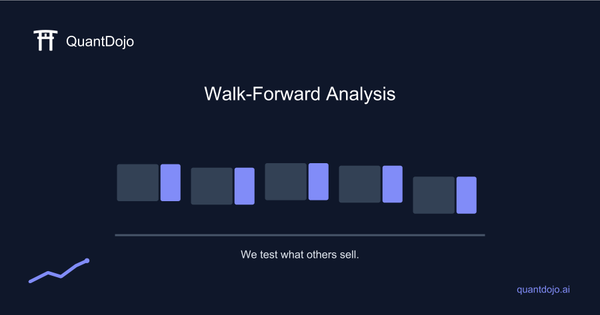
Walk-Forward Analysis
A single in-sample/out-of-sample split feels rigorous — it isn't. Walk-forward analysis is the only test that mimics how a strategy actually ages in the market.
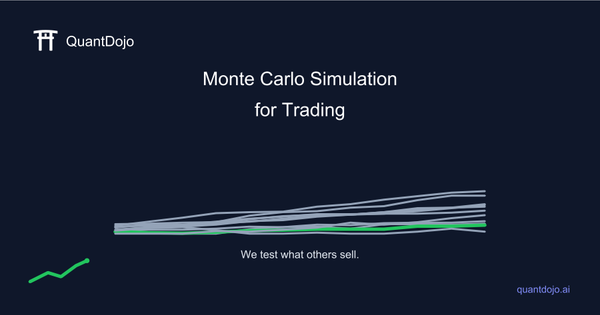
Monte Carlo
Your backtest shows one equity curve. Reality will hand you thousands of possible ones. Monte Carlo simulation maps that entire landscape — but most traders misread the map.
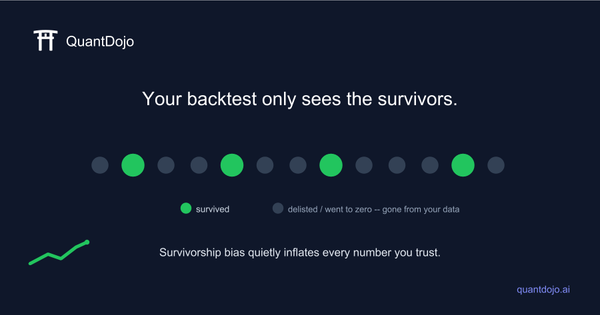
survivorship bias
Test a strategy on today's top coins or stocks and you've already rigged the result. Survivorship bias quietly inflates every backtest that ignores the assets that died.
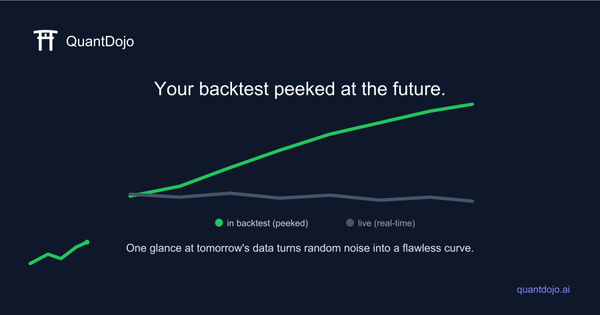
Lookahead Bias
Lookahead bias is the quietest backtest killer: a single accidental glance at future data turns random noise into a flawless equity curve. Here's how it sneaks in — and how to catch it.